
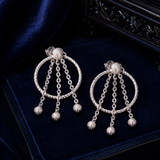
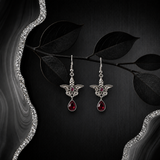
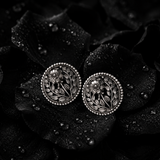
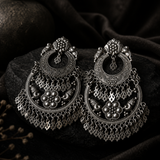


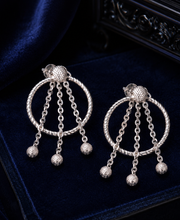
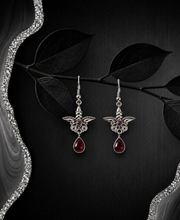
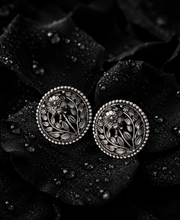
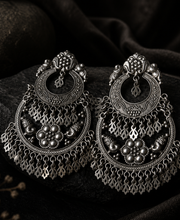

Before the city is fully awake, before the first auto-rickshaw clears its throat on the lane outside, the atelier has already begun to hum. In Jaipur, the day for a silversmith does not start with a bell or a screen. It starts with a quiet ritual: the unlocking of a worn wooden cabinet, the laying out of tools that have outlived the men who first held them, and the slow warming of a small furnace whose blue flame will, by mid-morning, coax solid silver into a glowing, obedient liquid.
This is where our jewellery is born. Not in a factory, not on a conveyor belt, but in a modest room thick with the smell of borax and beeswax, where the loudest sound is the patient tapping of a hammer and the brightest light is the one bouncing off a freshly burnished bangle. We invite you to spend a day here with us — to meet the people who turn metal into memory, and to understand why a piece of handcrafted silver jewellery can never quite be repeated, only honoured.
First Light: The City That Taught Silver to Sing
Jaipur has been a jeweller's city for centuries. Long before it became a name on a luxury label, it was a place where rulers summoned the finest craftsmen and where whole families settled into lanes named for the trades they practised. The skill did not arrive overnight; it was layered down, generation upon generation, like the fine sediment of a riverbed. Today the Jaipur jewellery artisans who work with us are the inheritors of that long apprenticeship — men and women who learned not from manuals but from watching a father's wrist, a grandfather's thumb.
When we say a piece is handcrafted in Jaipur, we are not borrowing the city's glamour for a marketing line. We mean that real hands, in a real workshop, shaped every curve you will eventually wear. The morning begins with that truth being quietly reaffirmed: the karigar arrives, ties a cloth around his waist, checks his files and burnishers, and settles onto a low seat that has shaped itself to him over years of use.
The Karigar: A Word That Carries a World
The Hindi word karigar translates loosely as "craftsman" or "artisan," but the translation flattens something important. A karigar is not simply someone who performs a task. He is a custodian of a method — a person who has internalised the temperament of metal so completely that his hands seem to think for him. Ask a master karigar how he knows when the silver is hot enough to pour, and he will not quote a temperature. He will tell you it is in the colour, the shimmer, the way the molten metal moves. That knowledge lives in the body, not on a page.
Many of the artisans in our atelier come from families who have worked silver for three, four, sometimes five generations. A boy might begin at twelve or thirteen, doing nothing but sweeping filings and fetching tools, watching the elders for years before he is trusted with his first small piece. This slow inheritance is the beating heart of artisanal jewellery India is rightly famous for. You can buy a machine in an afternoon. You cannot buy a lineage.
Mid-Morning: From Raw Metal to Living Form
By now the furnace is ready, and the most elemental stage of the day begins. Pure silver is alloyed to the exacting standard of 925 — that is, ninety-two and a half per cent pure silver, with the small balance added for strength and wearability. This is the foundation of every piece of handmade 925 sterling silver we make, and it is the same standard that earns our jewellery its BIS hallmark. Get the alloy wrong and everything downstream is compromised; get it right and the metal will reward you for decades.
The karigar melts the silver in a small crucible until it pools like mercury, then pours it — steady, unhurried — into a mould or onto a flat surface to form an ingot. There is a sharp hiss, a curl of smoke, and the room fills briefly with that unmistakable metallic warmth. What follows is a sequence of stages, each one a craft in itself:
- Wire-drawing: Thicker rods of silver are pulled by hand through a series of progressively smaller holes in a steel draw-plate, stretching and thinning the metal into wire of exactly the right gauge — the raw material for chains, jali work, and fine detailing.
- Hammering and forming: On a small anvil, the karigar coaxes flat or rounded silver into shape, blow by measured blow. The rhythm is almost musical, and the slight, beautiful irregularities of a hand-hammered surface are something no mould can fake.
- Filing and shaping: Edges are refined, joints are trued, and the rough form slowly resolves into the piece you would recognise. This is painstaking, meditative work, dust gathering on the karigar's fingers as the silhouette emerges.
- Soldering and assembly: Separate components are joined with a flame and a whisper of solder, the karigar's breath as controlled as a surgeon's so the heat lands exactly where it should and nowhere else.
- Burnishing and finishing: Finally the piece is polished and burnished until it holds the light — sometimes to a high mirror shine, sometimes left with a softer, more antique glow, depending on the design.
Where a design calls for colour or sparkle, the piece passes to the stone-setter. Setting is its own discipline: a tiny prong or bezel is eased around each stone by hand, secured firmly enough to last a lifetime yet gently enough never to crack the gem. A skilled setter can place a row of stones so evenly that they look machine-perfect — and yet they are not, which is precisely the point.
Why Handcrafted Differs From Machine-Made
It is a fair question, and one we are asked often: in an age of casting machines and 3D-printed moulds, why does the slow way still matter? The honest answer is that the two produce genuinely different objects.
A machine-made piece is, by design, identical to the ten thousand made before it. That uniformity has its uses, but it also has a coolness to it — a sense that no one in particular made it. A handcrafted piece carries the evidence of its making: the faint variation in a hammered texture, the slightly individual way a clasp sits, the warmth that comes from a person having held and considered every millimetre. These are not flaws. They are the fingerprints of the maker, and they are the reason no two of our pieces are ever truly the same.
There is also a question of soul, for want of a less romantic word. When a karigar shapes a bangle, he is drawing on years of judgement about how the metal wants to move, where it should be left a little heavier, how the light will eventually catch it on a wrist in motion. That accumulated wisdom is impossible to digitise. It is why our Karigari collection — our edit devoted to the craft itself — exists: to celebrate the hand of the maker as openly as the beauty of the piece.
The Inheritance: Keeping a Living Tradition Alive
Walk through the atelier in the early afternoon and you will see the generations side by side. A senior karigar bends over a particularly intricate piece while a younger apprentice watches, occasionally trying his own hand and being gently corrected. This is how the knowledge moves — not in a lecture hall but elbow to elbow, in the small adjustments and quiet nods of a working day.
We feel a real responsibility in this. Every order placed is, in a modest way, a vote for that tradition to continue — a reason for a young apprentice to keep learning a craft that machines could otherwise quietly replace. When you choose a handmade piece, you are not only buying silver. You are helping to keep a centuries-old skill economically alive in the lanes where it was born.
That sense of heritage runs through everything we design. Our Virasat collection takes its name from the very word for inheritance, drawing on traditional motifs and techniques carried forward by these same families. And for the truly elaborate, regal pieces — the kind that once adorned courts — our Shahi collection showcases what the most experienced karigars can achieve when given the time and the canvas to do their finest work.
Late Afternoon: The Quiet Pieces and the Grand Ones
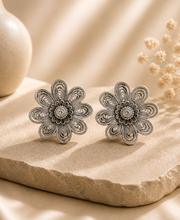
Not every piece that leaves the atelier is a statement. Some of the most beloved work is small and unshowy — a slim handcrafted ring, a pair of everyday studs, a delicate chain meant to be worn so often it becomes part of you. These pieces demand no less skill; arguably they demand more, because there is nowhere for a mistake to hide. Our Everyday Elegance collection is built entirely from these handmade staples — quiet luxuries shaped with the same care as their grander cousins.
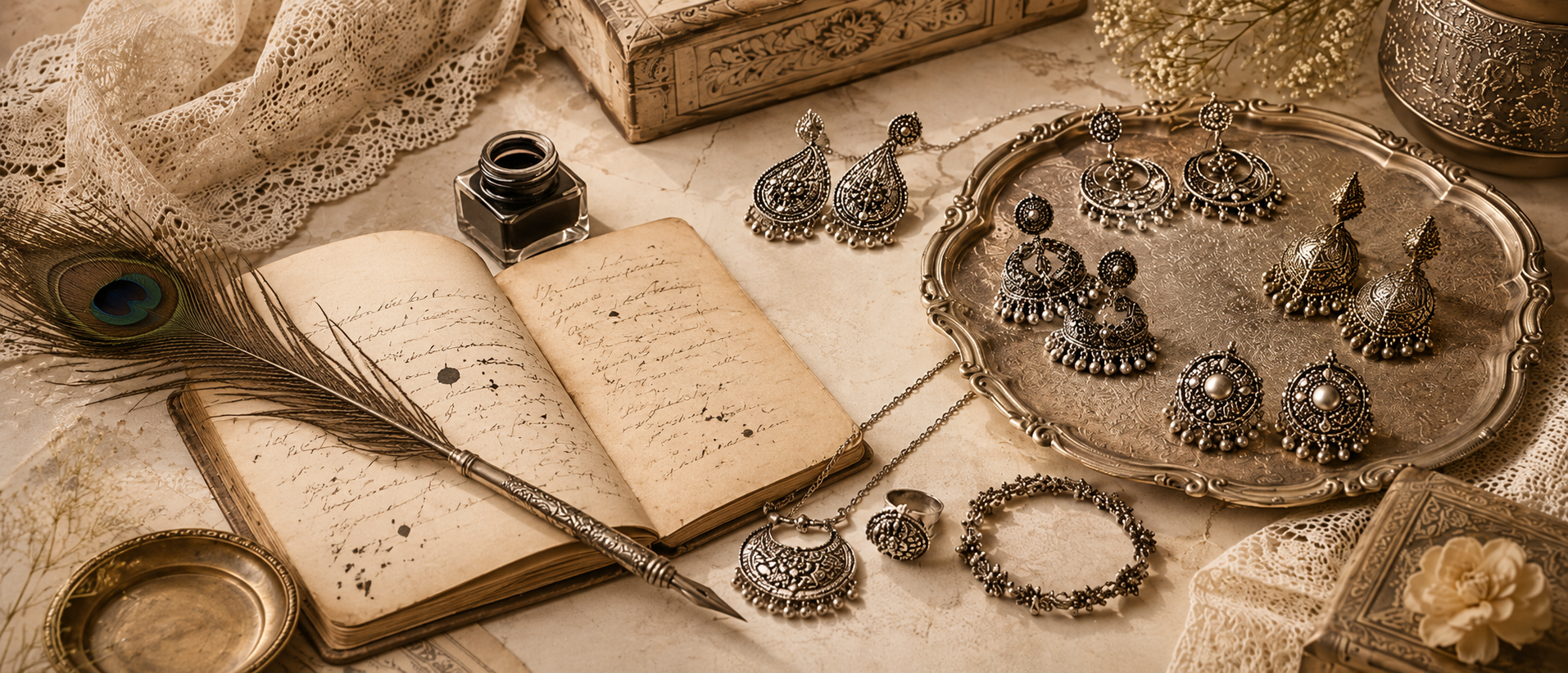
At the other end of the spectrum sit the elaborate, made-to-order creations: layered necklaces, intricate jali earrings, pieces dense with stone-setting and fine detail. These cannot be rushed, and we would not want them to be. An elaborate, custom or heavily detailed piece can take anywhere from a couple of weeks to several weeks to complete, depending on its complexity. That lead time is not a delay; it is the work being done properly, by hand, one careful stage at a time.
Dusk: A Piece Ready to Begin Its Life
As the light softens and the workshop quietens, a finished piece is cleaned, checked, and set aside. Tomorrow it will be hallmarked, packed, and sent on its way to someone who may never know the name of the karigar who made it — but who will, every time they wear it, carry a little of his patience and skill with them.
That, in the end, is what we hope you take from a day in our atelier: that the jewellery you wear from Silver Play is not a product so much as a relationship. Between metal and maker. Between one generation and the next. And, finally, between the craftsman in Jaipur and you, wherever in the world you happen to be.
Frequently Asked Questions
Are Silver Play pieces genuinely handcrafted?
Yes. Our jewellery is made by hand in a Jaipur atelier by skilled karigars, many of whom come from families that have worked silver for generations. From melting and pouring the metal to filing, soldering, stone-setting and burnishing, the key stages are carried out by human hands rather than mass-production machinery.
Why does handcrafted jewellery cost more than machine-made?
Handcrafting takes time, judgement and years of accumulated skill that simply cannot be replicated by a machine. Each piece passes through several stages of careful, manual work, and you are also supporting the livelihoods of master artisans and apprentices. The price reflects genuine craftsmanship and the use of quality 925 sterling silver, not just material cost.
Are all your pieces unique?
Because every item is shaped by hand, each carries tiny, natural variations in texture and finish — the subtle fingerprints of its maker. Even within the same design, no two pieces are ever perfectly identical. We consider this one of the quiet joys of owning handmade jewellery rather than a flaw.
Where is the jewellery made?
All of our jewellery is handcrafted in Jaipur, India — a city renowned for centuries as a hub of fine silver and gemstone craftsmanship. Our pieces are made by local karigars in a workshop setting and are 925 BIS-hallmarked sterling silver.
How long does a custom or elaborate piece take?
Simpler, in-stock styles are ready to dispatch promptly. Elaborate, made-to-order or heavily detailed pieces can take anywhere from a couple of weeks to several weeks, depending on the complexity of the design and the amount of hand-setting involved. We will always share an estimated lead time with you before you commit.
Can I request a custom piece?
We love bringing personal ideas to life. Depending on the design and our karigars' availability, we may be able to create a bespoke or made-to-order piece for you. Do reach out to us with your idea and we will let you know what is possible, along with an honest timeline.