
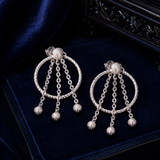
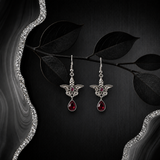
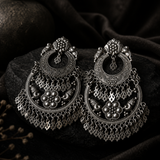


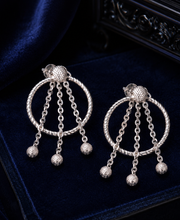
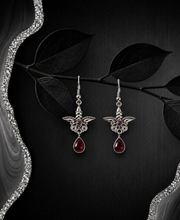
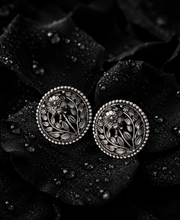
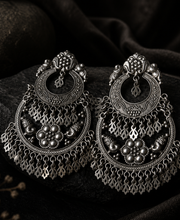
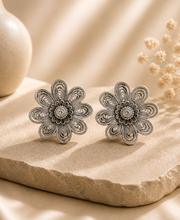

Every stone we set has a birthplace. Long before it rested against your collarbone or caught the light at your wrist, it was growing in the dark — pressed into being by heat, water and time inside the body of the earth. To wear a gemstone is to carry a small fragment of geography with you: a piece of a Brazilian hillside, a Sri Lankan riverbed, a Rajasthani quarry warmed by centuries of sun. At Silver Play, we set natural gemstone jewellery in 925 BIS-hallmarked sterling silver, each piece handcrafted in Jaipur, so that the stone's journey continues quietly in yours.
This is a map of those stones — where they form, what they have meant across cultures and generations, and which of our collections is built around each. Think of it as a gentle atlas: part geology, part folklore, part invitation to choose the piece that speaks to where you are right now.
Rose Quartz: Born in Granite, Worn for Love
Rose quartz forms deep within pegmatites — coarse-grained pockets of granite where minerals cool slowly enough to grow large and unhurried. Its blush comes from faint traces of titanium, iron or manganese threaded through the crystal, a pink so soft it seems to hold its breath. The finest material has long been associated with Brazil, particularly Minas Gerais, alongside deposits in Madagascar, South Africa and parts of India.
Across traditions, rose quartz is the stone of the heart. It has been called the stone of unconditional love and gentle compassion — not the dramatic kind, but the quiet, daily sort: tenderness towards others, and crucially towards oneself. In many households it is given to mark new bonds, reconciliations and the soft work of healing. We frame this as symbolism and emotional wellbeing, a way of holding an intention close, rather than any medical promise.
This is the spirit behind our Prem Moh collection — gulabi noor, the pink light of love and softness. Pieces set with rose quartz are designed to feel like a small, warm reminder worn against the skin: that softness is a strength, and that the heart deserves the same care we so readily give away.
Tiger Eye: Banded Light and the Courage to Stand Firm
Few stones are as quietly dramatic as tiger eye. It belongs to the quartz family and earns its shifting golden bands through a phenomenon called chatoyancy — light rolling across fibrous structures within the stone, so that a band of brightness seems to slide as you tilt it, like the eye of a great cat catching the sun. Much of the world's finest tiger eye comes from South Africa, with deposits also found in Western Australia, India and beyond.
In tradition, tiger eye is the stone of courage, willpower and grounded strength. Warriors and travellers were once said to carry it as a talisman of protection and resolve — something to steady the nerve before a difficult crossing. As a symbol, it speaks to determination: the focus to begin, and the spine to see a thing through. We offer this as a tradition of emotional fortitude rather than a claim on the body.
It is the heart of our Sankalp Shakti collection — sankalp, the vow or resolve; shakti, the energy to carry it out. These are pieces for the threshold moments: the new job, the bold decision, the morning you need to feel a little braver than you are. Worn in sterling silver, tiger eye's warm bands sit against cool metal like fire held in a steady hand.
Amethyst: Violet Crystals and a Quieter Mind
Amethyst is the regal cousin of common quartz, its purple owed to iron and natural irradiation working slowly within the crystal lattice. It grows in geodes — hollow cavities lined with crystal points, often found in ancient volcanic rock. Brazil and Uruguay are famed for their deep violet cathedrals of amethyst, with notable deposits in Zambia and India too. Split one open and you find a secret room of purple, untouched until the moment it meets the light.
For centuries amethyst has been linked to calm, clarity and spiritual balance. The name itself comes from the ancient Greek amethystos, "not intoxicated" — the stone was once believed to keep the mind clear and composed. Across cultures it has been worn by those seeking stillness: a symbol of the settled mind, of clarity that rises when the noise dies down. We hold to this as tradition and a sense of emotional calm, not as a remedy.
This is the soul of our Mann Shanti collection — mann, the mind; shanti, peace. Amethyst set in silver becomes a small anchor for the day: something to touch when the world speeds up, a violet reminder to breathe and return to centre.
Blue Opal and Aquamarine: The Stones of Fresh Starts
Some stones seem to carry water inside them. Aquamarine — a member of the beryl family, cousin to the emerald — owes its pale sea-blue to traces of iron, and its very name means "water of the sea". It forms in granitic pegmatites, with celebrated deposits in Brazil, Pakistan and across Africa. Blue opal, meanwhile, is a softer, dreamier stone: a hydrated silica that holds actual water within its structure, its milky blue most famously associated with the Andes of Peru.
Why we group them together
Both stones share a feeling more than a chemistry: the sense of flow, freshness and beginning again. Aquamarine was long carried by sailors as a token of safe passage and calm seas — a symbol of moving forward through uncertain water. Blue opal has been associated with gentle communication and emotional release, the easing of what has felt stuck. Together they speak the language of new chapters. As ever, we offer this as symbolism and emotional wellbeing rather than any medical claim.
They define our Nayi Shuruaat collection — nayi shuruaat, the new beginning. These are pieces for transformation: the move to a new city, the first day of something, the quiet decision to let an old version of yourself go. Set in 925 sterling silver, their watery blues feel like a clean breath of sea air worn close.
Earthy Heritage Stones: Roots, Memory and Belonging
Not every stone reaches for the sky. Some belong firmly to the earth — the warm browns, ambers, deep reds and grounding greens that have adorned Indian jewellery for centuries. These are the heritage stones: agates and jaspers banded like sediment, carnelians glowing like embers, smoky and earthen quartzes that feel as old as the hills they come from. Many are quarried across India itself, including the agate-rich belts that have supplied artisans for generations.
Geologically, these stones are records of slow time — layer upon layer of mineral-rich water laid down over ages, then cut and polished to reveal the earth's own brushwork. No two are alike, because no two stretches of ground are alike.
In tradition, earthy stones are the keepers of roots and heritage. They have long symbolised stability, belonging and connection to one's lineage — the feeling of being held by something older than yourself. This is the heart of our Virasat collection — virasat, inheritance, the things passed down. Crafted in Jaipur, a city whose jewellery traditions run deep, these pieces are made to feel like heirlooms in the making: jewellery that remembers where it came from, worn by people who do too.
A note on prosperity stones
Within this earthy, traditional family sit the stones long associated with abundance and good fortune — the warm golds and greens that Indian households have linked to prosperity for generations. If that is the intention drawing you, our Lakshmi Ratna collection gathers stones traditionally tied to wealth and flourishing, named for the goddess Lakshmi herself. Again, this is folklore and symbolism — a way of dressing an intention, not a guarantee.
Reading the Map: How to Choose Your Stone
There is no wrong way to choose. Some people are drawn first to a colour, others to a meaning, others simply to the way a stone catches the light across a room. Both instinct and intention are valid. If you would like a fuller reference — a single place to compare origins, colours and traditional associations across our semi-precious stones — our Stone Guide lays it all out, so you can learn more before you decide.
What unites every piece, whichever stone calls to you, is the setting: 925 BIS-hallmarked sterling silver gemstone jewellery, handcrafted in Jaipur and made to last. The stone carries the story; the silver carries the stone; you carry both, wherever you go next on your own map.
Frequently Asked Questions
Are the gemstones natural or treated?
The gemstones we use are natural, semi-precious stones formed within the earth, not laboratory-grown imitations. Some natural stones do receive standard, widely accepted industry treatments — such as gentle heat or stabilising — to improve durability or even out colour, which is common and accepted practice across the jewellery world. We work to source genuine, good-quality material, and our Stone Guide offers more detail on each stone. If you have a specific question about a particular piece, our team is always happy to help.
Precious versus semi-precious — what's the difference?
Traditionally, only four stones are called "precious": diamond, ruby, sapphire and emerald. Every other natural gemstone — including rose quartz, amethyst, tiger eye and aquamarine — is grouped as "semi-precious". The distinction is largely historical and about rarity rather than beauty or quality; many semi-precious stones are extraordinary in their own right. At Silver Play, we celebrate semi-precious stones for their colour, character and the meanings they carry.
How do I care for gemstone jewellery?
Treat your pieces gently: remove them before showering, swimming, sleeping or applying perfume and lotions, as harsh chemicals can dull both stone and silver. Clean them with a soft, dry cloth, and store each piece separately in a pouch or lined box to avoid scratches. Softer stones such as opal need especially careful handling and should be kept away from knocks and heat. With a little care, your jewellery will stay beautiful for years.
Can I choose a stone by its meaning?
Absolutely — many of our customers do exactly that, and our collections are organised around traditional themes to make it easy. Whether you are drawn to love (Prem Moh), courage (Sankalp Shakti), calm (Mann Shanti) or new beginnings (Nayi Shuruaat), you can let the meaning guide you. These associations are rooted in tradition and symbolism, offered to support emotional wellbeing rather than as any medical claim. Choose whatever intention feels right for you.
Are the stones genuine?
Yes. We use genuine natural gemstones, set in 925 BIS-hallmarked sterling silver and handcrafted in Jaipur. The BIS hallmark certifies the silver's purity, and we take care to source authentic stones for every piece. If you would like to understand more about a stone's origin and characteristics, our Stone Guide is the best place to start.
Do colours and patterns vary between pieces?
They do — and that is part of the beauty of natural stones. Because each gemstone forms uniquely within the earth, no two are ever identical in colour, banding or pattern. Stones such as tiger eye, agate and opal are especially individual, so the piece you receive may differ slightly from the photograph. Rather than a flaw, this variation is a quiet signature of authenticity — proof that your stone is truly one of a kind.